Beginner Quilt Sewing Machine: 6 Best Picks for New Quilters (2026)
Comparing six beginner quilt sewing machine options by stitch count, table space, presser feet and ease of use, so new quilters can choose with confidence.
 By Graham Fisher
Updated November 8, 2026
 By Graham Fisher
Updated November 2026
Choosing a beginner quilt sewing machine is less about finding the most features and more about finding the right balance between a stable stitch, enough working space for a quilt top, and controls you can learn in a weekend. New quilters often want a machine that handles piecing and free-motion work without overwhelming them with settings they will never use. The picks below were selected by comparing manufacturer specifications, brand reputation for quilting work, and patterns that owners commonly report in their feedback, with a focus on stitch range, table size, included presser feet and how approachable the controls are.
Our top picks at a glance
- 1TOP CHOICEBest overallBrother CS7000X Sewing and Quilting Machine LCD DisplayView on Amazon
- 2
 TOP CHOICEBest for simple, budget-minded startsBrother XR3774 Sewing and Quilting Machine 37 StitchesView on Amazon
- 3
 TOP CHOICEBest for small spaces and portabilityBrother Sewing Machine, XM2701, Portable Sewing Machine, 27 StitchesView on Amazon
- 4
 Best for growing into more stitchesBrother XR9550 Computerized Sewing and Quilting Machine 165 StitchesView on Amazon
- 5
 Best for home sewists wanting a large work surfaceSewLaVie 1130 Computerized Sewing and Quilting Machine with 300 StitchesView on Amazon
- 6
 Best for light hand projects and kids' craft workGobreezy Portable Mini Sewing Machine for Beginners with Extension BoardView on Amazon
Our Top Picks
Each option below is ranked by how well it fits the main needs of a beginning quilter: a wide enough table for quilt tops, a dependable straight stitch, easy bobbin and tension handling, and room to learn without outgrowing the machine in the first few months.
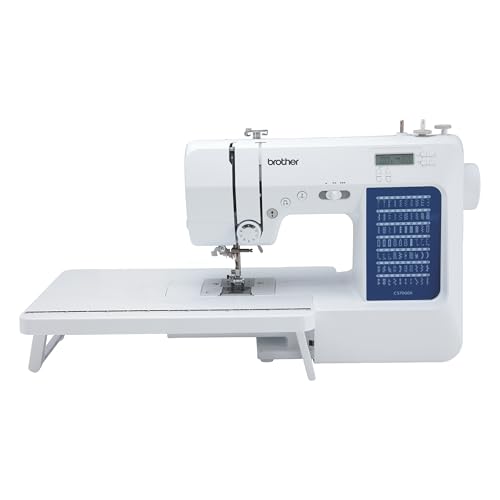
Brother CS7000X Sewing and Quilting Machine LCD Display
Brother CS7000X Sewing and Quilting Machine LCD Display | 70 Built-in Stitches, LCD Display, Wide Table, 10 Included Feet
Best for: Overall best for beginners who want quilting features in a single machine
This model suits someone who expects to move from simple garments into patchwork and quilt tops within the first year. The LCD screen shows stitch selection clearly, and the wide table gives enough room to manage a lap quilt without constant repositioning.
Key specs
- 70 built-in stitches
- LCD display
- Wide table
- 10 included presser feet
Pros
- Large stitch library gives room to experiment as skills grow
- Included feet cover most piecing and quilting basics
- Wide table reduces fabric drag on larger projects
Cons
- Feature set can feel crowded for someone who only wants straight seams
- Owners often mention that the menu takes a few sessions to learn
Bottom line: A strong first choice for a new quilter who wants one machine to handle piecing, basic quilting and everyday mending.
View on AmazonBrother XR3774 Sewing and Quilting Machine 37 Stitches
Brother XR3774 Sewing and Quilting Machine 37 Stitches | 37 Built-in Stitches, Wide Table, 8 Included Sewing Feet
Best for: Best for simple, budget-minded starts
This machine suits a beginner who wants the essentials without a long list of options. Thirty-seven stitches cover straight, zigzag and decorative patterns, and the eight included feet are enough for most early quilting tasks.
Key specs
- 37 built-in stitches
- Wide table
- 8 included sewing feet
Pros
- Straightforward stitch selection suits a first machine
- Wide table supports quilt sandwiches reasonably well
- Includes a useful set of feet for piecing
Cons
- Fewer stitches than the computerized models in this list
- May feel limiting once free-motion or decorative work becomes a goal
Bottom line: Good for a beginner who wants dependable piecing and basic quilting without paying attention to advanced features.
View on AmazonBrother Sewing Machine, XM2701, Portable Sewing Machine, 27 Stitches
Brother Sewing Machine, XM2701, Portable Sewing Machine, 27 Stitches | Easy sewing machine with 6 sewing feet, auto needle threader, and free arm for cuffs, sleeves, and pant legs
Best for: Best for small spaces and portability
Someone sewing in a spare room, apartment or shared living area will appreciate a lighter machine that can be stored easily. This model is aimed at everyday sewing, with a free arm that helps with cuffs, sleeves and pant legs.
Key specs
- 27 built-in stitches
- 6 included sewing feet
- Auto needle threader
- Free arm
Pros
- Auto needle threader saves time and eyestrain
- Free arm is helpful for tubular sewing
- Compact footprint fits small work areas
Cons
- Smaller work surface can be tight for large quilt tops
- Fewer stitches limit decorative options
Bottom line: The right choice for a beginner with limited space who will mainly piece smaller quilts, bags and garment projects.
View on AmazonBrother XR9550 Computerized Sewing and Quilting Machine 165 Stitches
Brother XR9550 Computerized Sewing and Quilting Machine 165 Stitches | 165 Built-in Stitches, LCD Display, Wide Table, 8 Included Presser Feet
Best for: Best for growing into more stitches
This is a good fit for a beginner who already knows they enjoy quilting and wants room to develop. The 165-stitch library covers a wide range of decorative and utility stitches, and the eight included presser feet make it easier to try different techniques without buying extras right away.
Key specs
- 165 built-in stitches
- LCD display
- Wide table
- 8 included presser feet
Pros
- Large stitch library supports long-term skill growth
- LCD display makes settings easier to read
- Wide table suits quilt-sized projects
Cons
- More features mean more to learn before the machine feels comfortable
- Some owners find the stitch menu slower to navigate than a simpler model
Bottom line: Suited to a beginner who expects to quilt regularly and would rather learn on a machine that can keep up with them.
View on AmazonSewLaVie 1130 Computerized Sewing and Quilting Machine with 300 Stitches
SewLaVie 1130 Computerized Sewing and Quilting Machine with 300 Stitches | Ideal for various fabrics, clothes making & quilting. Best for home sewists. Large work surface, LCD & speed control
Best for: Best for home sewists wanting a large work surface
A home sewist who plans to work on bed-sized quilts or large garment panels may appreciate the generous working area and the high stitch count. The listing describes it for a range of fabrics, clothing and quilting work.
Key specs
- 300 built-in stitches
- LCD display
- Large work surface
- Speed control
Pros
- Large work surface reduces strain on bulky quilts
- Speed control helps beginners stay in a comfortable pace
- High stitch count offers plenty of room to experiment
Cons
- Brand is less established in quilting circles than Brother, so long-term support is worth checking
- A large stitch library can be more than a first-time quilter needs
Bottom line: A reasonable choice for a home sewist who values workspace and speed control, provided the warranty and support terms meet their expectations.
View on AmazonGobreezy Portable Mini Sewing Machine for Beginners with Extension Board
Gobreezy Portable Mini Sewing Machine for Beginners with Extension Board | 12 Built-In Stitches, Dual Speeds with Foot Pedal, Heavy Duty, Hand Held, Complete Sewing Kits for Adults & Kids
Best for: Best for light hand projects and kids’ craft work
This is a mini machine rather than a full-size quilting model. It suits repairs, small craft projects and learning the basics of machine sewing, though it is not designed for heavy quilt tops.
Key specs
- 12 built-in stitches
- Dual speeds with foot pedal
- Extension board included
- Handheld and portable
Pros
- Very portable and easy to store
- Dual speeds help control on small seams
- Extension board adds working room
Cons
- Not suited to thick quilt layers or heavy-duty piecing
- Limited stitch selection restricts options
Bottom line: A good supplementary machine or teaching tool, but a beginner planning actual quilts should look at the full-size models above first.
View on AmazonBuying Guide
Stitch range and stitch quality
Quilting needs a reliable straight stitch above all else. Decorative and utility stitches are useful for finishing, but a beginner rarely uses more than a handful. Check that the machine produces an even straight stitch at your chosen speed before worrying about the total count.
Good picks for this: Brother CS7000X Sewing and Quilting Machine, Brother XR3774 Sewing and Quilting Machine
Table size and working space
A quilt top can weigh several pounds and needs room to rest on the table. Look for a wide or extension table and measure the bed against the quilt blocks you plan to sew. Small machines work for pieced blocks but can make larger tops awkward.
Good picks for this: SewLaVie 1130 Computerized Sewing and Quilting Machine, Brother XR9550 Computerized Sewing and Quilting Machine
Presser feet and included accessories
A quarter-inch foot is essential for accurate piecing, and an walking or even-feed foot helps move layers evenly. Count how many feet come in the box and check whether the basics are included before buying extras.
Good picks for this: Brother CS7000X Sewing and Quilting Machine, Brother XR9550 Computerized Sewing and Quilting Machine
Ease of threading and bobbin handling
Beginners spend a lot of time threading and winding bobbins. An auto needle threader, a clearly marked threading path and a top-loading or drop-in bobbin all reduce frustration. Practice threading a few times in the store or from the manual before committing.
Good picks for this: Brother XM2701 Portable Sewing Machine, Brother CS7000X Sewing and Quilting Machine
Speed control and motor power
Adjustable speed lets a beginner slow down for precise seams and speed up for long straight runs. Machines with a speed slider or a foot pedal that responds smoothly tend to be easier to control on quilt layers.
Good picks for this: SewLaVie 1130 Computerized Sewing and Quilting Machine, Gobreezy Portable Mini Sewing Machine
Portability and storage
If you sew in a shared space or need to pack up after each session, weight and carrying case matter. A lighter machine is easier to move, but heavier machines typically sew more steadily through thick layers.
Good picks for this: Brother XM2701 Portable Sewing Machine, Gobreezy Portable Mini Sewing Machine
Long-term growth and maintenance
A machine should be able to grow with you. Check whether replacement parts, a warranty and manufacturer support are readily available. Follow the manual’s cleaning and oiling schedule, and replace the needle regularly, especially when quilting through multiple layers.
Good picks for this: Brother XR9550 Computerized Sewing and Quilting Machine, Brother CS7000X Sewing and Quilting Machine
FAQ
Do I need a computerized machine to start quilting?
No. A basic mechanical machine with a reliable straight stitch and a quarter-inch presser foot is enough for piecing. Computerized models add stitch choice and LCD controls, which many beginners find helpful once they know what they want to do.
How big a table do I need for quilting?
A wide table of around eight to ten inches of width makes it easier to support a quilt top, though smaller tables can still work for blocks and small projects. Measure your typical project before deciding.
Is a mini sewing machine suitable for quilts?
Mini machines are better suited to light fabric, repairs and small craft work. For quilt sandwiches with batting and backing, a full-size machine with a stronger motor and more table space is the safer choice.
What presser foot should a beginner start with?
A quarter-inch seam foot is the most useful for piecing. A zigzag foot and a walking foot are good additions for finishing and layered quilting.
How often should I change the needle when quilting?
Change the needle after every project or whenever you hear skipping or see thread breaks. Quilting through multiple layers dulls needles faster than garment sewing, so a fresh needle often solves stitch problems.
Can I learn quilting on a basic machine and upgrade later?
Yes. Many quilters learn the fundamentals on a simple machine and move to a larger model once they know which features they use. Choosing a brand with good parts availability makes that transition easier.
Conclusion
For most beginners, the Brother CS7000X Sewing and Quilting Machine offers the best balance of stitch range, included feet and table space for a first quilting machine. The Brother XR3774 Sewing and Quilting Machine suits a simpler start, while the Brother XR9550 Computerized Sewing and Quilting Machine fits a beginner who expects to keep growing. The Brother XM2701 Portable Sewing Machine is a sensible pick for small spaces, the SewLaVie 1130 Computerized Sewing and Quilting Machine for home sewists who want more working room, and the Gobreezy Portable Mini Sewing Machine for light craft and teaching rather than full quilts.
Sources
- Safety guidance for household sewing equipment and electrical appliances (cpsc.gov)
- Information on electrical appliance use and power considerations for home equipment (energy.gov)
- Research-based resources on textile care and home sewing practices (extension.org)
Related reading
- Which Sewing Machine Is Best for a Beginner? 5 Top Picks (2026)
- Which Janome Sewing Machine Beginner Models Are Worth Buying?
- Which Beginner Upholstery Sewing Machine Should You Buy? A Practical Guide
About Graham Fisher
Graham Fisher is part of our editorial team and reviews and edits our sewing supplies guides, checking product details against manufacturer specifications and owner feedback.
About the author
Graham Fisher writes reviews and buying guides for Sewing Thread Online.