Children’s Beginner Sewing Machine Projects: 4 Best Picks for Kids (2026)
Find the best children's beginner sewing machine projects with our picks of books and kits for kids. Compare features, pros, cons and who each suits.
 By Graham Fisher
Updated November 10, 2026
 By Graham Fisher
Updated November 2026
Choosing children’s beginner sewing machine projects can feel overwhelming, especially if you are a parent or teacher who has never threaded a machine yourself. The right project book or kit should teach real skills, use simple steps a young sewist can follow, and produce something a child actually wants to keep. We looked at each option against four criteria: age suitability, clarity of instructions, variety of projects, and how well the materials support a first-time sewist. The picks below range from a dedicated project book to a hands-on kids’ machine and two structured lesson books.
Our top picks at a glance
- 1TOP CHOICEBest overallMy First Sewing Machine Book: 35 fun and easy projects for children aged 7 years +View on Amazon
- 2
 Best for a portable first machineSew Mighty Mini Sewing Machine for Kids, Beginners, Travel & More- PorView on Amazon
- 3
 Best for building skills step by stepSewing School 2: Lessons in Machine Sewing; 20 Projects Kids Will Love to MakeView on Amazon
- 4
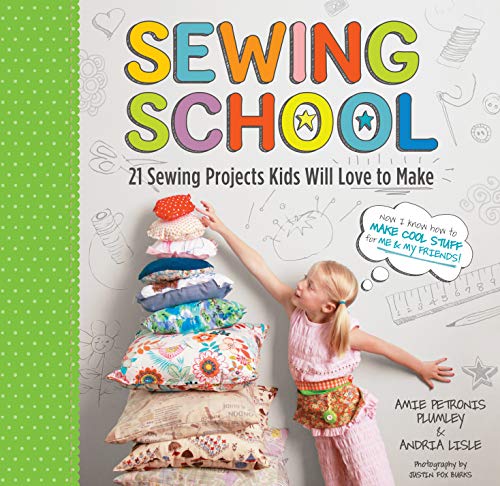 Best for a single-book starter librarySewing School: 21 Sewing Projects Kids Will Love to MakeView on Amazon
Our Top Picks
Quick Comparison
| Product | Best for | Key feature |
|---|---|---|
| My First Sewing Machine Book | Ages 7 and up working through projects independently | 35 projects with step-by-step instructions |
| Sew Mighty Mini Sewing Machine for Kids | Kids who want their own machine for small projects | Portable, battery-powered, dual-speed control |
| Sewing School 2 | Learners ready to build on basic skills | Lesson-based structure with 20 projects |
| Sewing School | Beginners who want a foundation book | 21 projects covering core techniques |
My First Sewing Machine Book: 35 fun and easy projects for children aged 7 years +
My First Sewing Machine Book: 35 fun and easy projects for children aged 7 years +
Best for: Overall best for children’s beginner sewing machine projects
This book suits children around seven and older who want a clear path from threading a machine to finishing finished items. It also works well for a parent sitting alongside a child, since each project explains the sewing concepts behind the steps rather than only listing instructions. A related read: Acrylic Yarn for Blanket Projects: A Step-by-Step Guide for Beginners.
Key specs
- Format: project book
- Projects: 35
- Intended age: 7 years and up
Pros
- Large number of projects gives plenty of practice variety
- Progression moves from simple stitching to more involved builds
- Written for a young reader, with easy-to-follow steps
Cons
- Projects assume access to a machine and basic supplies
- Some builds may need adult help for pressing and cutting
Bottom line: The strongest all-round choice for a child who is starting out and wants many projects to try.
View on AmazonSew Mighty Mini Sewing Machine for Kids, Beginners, Travel & More- Portable, Battery Powered
Sew Mighty Mini Sewing Machine for Kids, Beginners, Travel & More- Portable, Battery Powered, use for Traveling, Quick Repairs, Small Projects & Children– Dual-Speed, AC & DC power, Foot Pedal & More
Best for: Best for a portable first machine
This is a compact machine aimed at children and beginners who want their own sewing tool for small projects and quick repairs. It fits families who want a machine that can travel or sit on a desk rather than a full-size model.
Key specs
- Power: battery powered, with AC and DC options
- Foot pedal included
- Dual-speed setting
Pros
- Portable and light enough for a child to handle
- Battery operation means it works without a wall outlet
- Dual-speed control helps beginners slow down
Cons
- Limited stitch capacity compared with full-size machines
- Best suited to small projects rather than heavy fabric
Bottom line: A good pick for a child who needs a dedicated, portable machine for simple projects.
View on AmazonSewing School 2: Lessons in Machine Sewing; 20 Projects Kids Will Love to Make
Sewing School ® 2: Lessons in Machine Sewing; 20 Projects Kids Will Love to Make
Best for: Best for building skills step by step
This book is for children who have already mastered basic stitching and want to move into lesson-based machine work. It suits a classroom or homeschool setting where a sequence of lessons matters.
Key specs
- Format: lesson-based project book
- Projects: 20
Pros
- Lessons build on each other in a logical order
- Projects are designed to be enjoyable for kids
- Good companion to a first book
Cons
- Works best after a beginner book, not as a first step
- Requires a machine and supplies already on hand
Bottom line: Ideal for a learner ready to progress from basics to more structured machine lessons.
View on AmazonSewing School: 21 Sewing Projects Kids Will Love to Make
Sewing School ®: 21 Sewing Projects Kids Will Love to Make
Best for: Best for a single-book starter library
This is the foundation title in the series and a sensible first purchase for a child new to sewing. It is well suited to parents who want one book covering the core techniques before adding more advanced titles.
Key specs
- Format: project book
- Projects: 21
Pros
- Covers the essential techniques children need first
- Projects range from simple to moderately involved
- Pairs well with the follow-up volume
Cons
- Some projects assume familiarity with a machine
- Fewer projects than the larger book above
Bottom line: A solid first book for a child who wants to learn fundamentals before moving on.
View on AmazonBuying Guide
Age and skill level
Match the project book to the child’s reading level and hand control. Books aimed at ages seven and up usually assume a child can follow numbered steps and handle pins with supervision. Younger children often need more adult involvement, so look for picture-led instructions and simpler builds.
Good picks for this: My First Sewing Machine Book, Sewing School
Machine type and power
Mini and battery-powered machines are easier for small hands to manage and reduce the risk of plugging in unattended, but they handle less fabric. A full-size machine gives more stitch options. Check whether the machine has a foot pedal and a speed control, since a slower setting helps beginners keep their stitching even.
Good picks for this: Sew Mighty Mini Sewing Machine for Kids
Project variety
A book with many projects gives a child repeated practice across different techniques. Look for a mix of straight-line seams, simple hems, and small finished items. Fewer, deeper projects can suit a child who prefers to master one skill at a time.
Good picks for this: My First Sewing Machine Book, Sewing School 2
Instruction clarity
Clear diagrams and numbered steps matter more than length. Check whether the book explains why each step matters, not just what to do. This helps a child troubleshoot when a seam puckers or a thread breaks.
Good picks for this: Sewing School, Sewing School 2
Safety and supervision
Needles, rotary cutters and hot irons all carry risk for children. Choose projects that allow adult supervision at the cutting and pressing stages. The U.S. Consumer Product Safety Commission publishes general guidance on safe use of household products and toys, which is a useful reference when setting up a child’s sewing space.
Good picks for this: My First Sewing Machine Book, Sewing School
Durability and portability
A child’s machine gets moved, dropped and stored in tight spaces. Lightweight, compact models are easier to store and carry, while sturdier builds last longer under frequent use. Consider where the machine will live before choosing between portable and stationary options.
Good picks for this: Sew Mighty Mini Sewing Machine for Kids
Next steps after a first book
Plan for progression. A child who finishes a beginner book often wants more challenging projects. Series titles let a learner build on the same teaching style, so the second book feels familiar rather than a jump in difficulty.
Good picks for this: Sewing School 2, Sewing School
FAQ
What age is best to start children’s beginner sewing machine projects?
Many project books are written for children around seven and older, since they can follow numbered steps and manage basic hand control. Younger children can start with hand sewing and move to a machine with close adult supervision.
Do children need their own sewing machine?
Not always. A child can complete many projects on a family machine with an adult nearby. A dedicated mini machine is useful when a child wants independent practice for small items.
How long does a typical beginner project take?
Simple projects such as a pouch or small bag often take one to three sessions of an hour or so, depending on the child’s pace. Plan shorter sessions for younger learners and allow breaks to prevent frustration.
Which fabrics are best for first projects?
Medium-weight cotton is forgiving and easy to feed through a machine. Avoid slippery synthetics and very thick denim until the child has more control over stitching.
Should a child use pins or clips?
Clips can be safer for young hands because they avoid sharp points, but pins give more precise alignment for seams. Teach pin safety and always count pins back at the end of a session.
Is a mini sewing machine enough for children’s projects?
A mini machine covers simple straight seams, hems and small craft items well. For heavier fabrics or more stitch choices, a larger machine is a better long-term option.
How do I keep a child motivated through a sewing book?
Let the child choose a project from the book and finish one item before starting another. Celebrate finished pieces and display them, since visible results are a strong motivator for young sewists.
Conclusion
For most families, My First Sewing Machine Book is the strongest starting point because it offers many projects with clear steps. A child who wants their own machine for small jobs may prefer the Sew Mighty Mini. Learners ready for a structured progression will get the most from Sewing School 2, while Sewing School makes a sensible foundation title. Match the pick to the child’s age, machine access and next goal, and the right children’s beginner sewing machine projects will follow naturally.
Sources
- General product safety guidance for children's toys and household items, useful when setting up a sewing space (cpsc.gov)
- Research on hand skill development in children, relevant to choosing age-appropriate sewing tasks (ncbi.nlm.nih.gov)
Related reading
- Sewing Machine Beginner Projects: 8 Easy Starters That Build Real Skills
- Brother SE700 Computerized Sewing & Embroidery Machine: A Beginner's Guide
- Beginner Sewing Machine Projects Clothes: 8 Easy Starters for New Sewists
About Graham Fisher
Graham Fisher is part of our editorial team and reviews and edits our sewing supplies guides, checking product details against manufacturer specifications and owner feedback.
About the author
Graham Fisher writes reviews and buying guides for Sewing Thread Online.