Computerized Sewing Machine for Beginners: 5 Best Picks Compared (2026)
Shopping for a computerized sewing machine for beginners? Compare five Brother models on stitches, ease of use, and included feet to find your match.
 By Emily Parker
Updated November 8, 2026
 By Emily Parker
Updated November 2026
Choosing a computerized sewing machine for beginners comes down to a few practical questions: how many stitches you actually need, whether the controls make sense on your first day, how much table space you have, and whether the included presser feet will cover the projects you want to try. This guide compares five Brother machines against those criteria. The selection is based on published specifications, brand reputation, and the patterns owners commonly describe in their feedback, not on hands-on testing.
Our top picks at a glance
- 1TOP CHOICEBest overallBrother XR9550 Computerized Sewing and Quilting MachineView on Amazon
- 2
 TOP CHOICEBest for small kitchensBrother XM2701 Portable Sewing MachineView on Amazon
- 3
 TOP CHOICEBest budget pickBrother CS5055 Computerized Sewing Machine with LCD DisplayView on Amazon
- 4
 Best for quiltingBrother CP100X Computerized Sewing and Quilting MachineView on Amazon
- 5
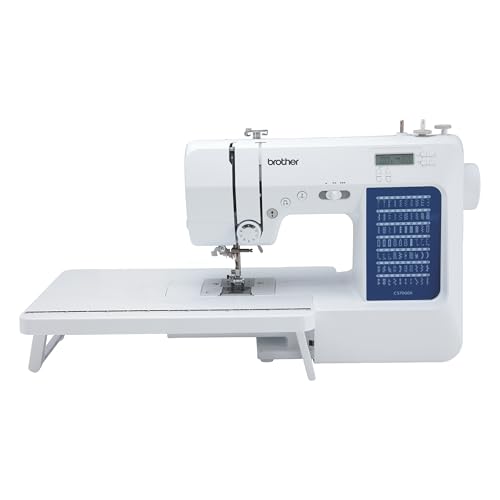 Best for wide-table projectsBrother CS7000X Sewing and Quilting MachineView on Amazon
Our Top Picks
Quick Comparison
| Product | Best for | Key feature |
|---|---|---|
| Brother XR9550 Computerized Sewing and Quilting Machine | Beginners who want the most stitches and a wide table | 165 built-in stitches with 8 included presser feet |
| Brother XM2701 Portable Sewing Machine | Small spaces and simple home repairs | 27 stitches with auto needle threader and free arm |
| Brother CS5055 Computerized Sewing Machine | Budget-minded first-time buyers | LCD display with a straightforward stitch selection |
| Brother CP100X Computerized Sewing and Quilting Machine | Beginners interested in quilting | Quilting-oriented stitch options and a sturdy build |
| Brother CS7000X Sewing and Quilting Machine | Beginners who want a larger work surface | 70 built-in stitches, wide table, and 10 included feet |
Brother XR9550 Computerized Sewing and Quilting Machine
Brother XR9550 Computerized Sewing and Quilting Machine 165 Stitches | 165 Built-in Stitches, LCD Display, Wide Table, 8 Included Presser Feet
Best for: Beginners who want the widest range of built-in stitches in this group
This machine suits new sewists who expect to move quickly past basic straight stitching into decorative stitches, buttonholes, and quilting work. The large stitch library means you are less likely to outgrow it within the first year.
Key specs
- 165 built-in stitches
- LCD display
- Wide table
- 8 included presser feet
Pros
- Large stitch selection covers most home sewing needs
- Included presser feet reduce the need for early accessory purchases
- Wide table supports larger projects such as quilts and bags
Cons
- The number of stitches can feel overwhelming to someone who only plans basic hems
- Takes up more floor and table space than compact models
Bottom line: A strong pick for beginners who want room to grow and are willing to learn a fuller feature set.
View on AmazonBrother XM2701 Portable Sewing Machine
Brother Sewing Machine, XM2701, Portable Sewing Machine, 27 Stitches | Easy sewing machine with 6 sewing feet, auto needle threader, and free arm for cuffs, sleeves, and pant legs
Best for: Small kitchens, apartments, and occasional repairs
This is a lightweight, portable option for people who sew in short sessions and need to store the machine out of sight. It handles hems, mending, and simple garment construction without a steep learning curve.
Key specs
- 27 built-in stitches
- Auto needle threader
- Free arm for cuffs, sleeves, and pant legs
- 6 included sewing feet
Pros
- Auto needle threader saves time and eye strain
- Free arm makes tubular sewing easier for beginners
- Compact footprint fits small spaces
Cons
- Fewer stitches than the larger Brother models
- Not designed for heavy quilting or thick upholstery fabric
Bottom line: Ideal if your sewing is mostly repairs, alterations, and small projects, and space is tight.
View on AmazonBrother CS5055 Computerized Sewing Machine with LCD Display
Brother CS5055 Computerized Sewing Machine with LCD Display
Best for: Budget-conscious first-time buyers who want computer controls
This model gives you the computerized features that make setup simpler, such as a clear LCD screen and programmed stitch selection, without the extra stitch count of premium models. It fits learners who want to focus on technique first.
Key specs
- Computerized stitch selection
- LCD display
Pros
- Computer controls make stitch changes straightforward
- Good entry point into computerized machines
- Simpler feature set reduces early overwhelm
Cons
- Stitch library is smaller than the top-end options in this list
- Fewer included accessories may mean buying extra feet later
Bottom line: A sensible starting point for beginners who want computerized convenience without paying for features they may not use yet.
View on AmazonBrother CP100X Computerized Sewing and Quilting Machine
Brother CP100X Computerized Sewing and Quilting Machine
Best for: Beginners leaning toward quilting and patchwork
The CP100X is aimed at sewists who plan to piece quilt tops or work with layered fabrics. Its quilting orientation makes it a good match for people whose first big project is a quilt rather than garments.
Key specs
- Computerized stitch selection
- Quilting-oriented stitch options
Pros
- Quilting focus suits patchwork and layered projects
- Computerized controls simplify stitch changes
- Built for regular home sewing sessions
Cons
- Less suited to garment sewing with a wide range of decorative stitches
- Owners sometimes mention needing to buy additional feet for specialty work
Bottom line: Choose this if quilting is your main goal and you want a machine that leans into that style of sewing.
View on AmazonBrother CS7000X Sewing and Quilting Machine
Brother CS7000X Sewing and Quilting Machine LCD Display | 70 Built-in Stitches, LCD Display, Wide Table, 10 Included Feet
Best for: Beginners who want a larger work surface and a solid set of included feet
This machine is a good middle ground for new sewists who want more stitches than an entry model without moving to the largest feature sets. The wide table helps when you are managing bulky seams or large panels.
Key specs
- 70 built-in stitches
- LCD display
- Wide table
- 10 included presser feet
Pros
- Wide table gives more support for large fabric pieces
- 10 included feet cover a broad range of techniques
- 70 stitches offer enough variety for steady skill growth
Cons
- Larger footprint than compact machines
- Fewer stitches than the XR9550 for those who want maximum choice
Bottom line: A well-balanced choice for beginners who expect to sew garments, home decor, and quilts over time.
View on AmazonBuying Guide
Stitch Count and Stitch Types
A beginner needs straight stitch, zigzag, a buttonhole, and a few utility stitches to start. Machines with 27 to 70 stitches cover this comfortably, while 165 stitches give room for decorative work. Look at which stitches are actually useful for your projects instead of counting numbers alone.
Good picks for this: Brother XM2701, Brother CS7000X
Automatic Features and Ease of Use
An auto needle threader, an LCD screen, and computerized stitch selection all reduce setup friction. These features matter most in the first few months, when you are still learning how threading, tension, and stitch width interact.
Good picks for this: Brother XM2701, Brother CS5055
Table Size and Workspace
A wide or extension table gives you more support when sewing bulky or large pieces. If you plan to work on quilts or home decor, check the table dimensions before buying. Measure the space where the machine will live, including room to pull fabric from both sides.
Good picks for this: Brother CS7000X, Brother XR9550
Included Presser Feet and Accessories
Presser feet control how fabric moves under the needle. Machines with a larger set of included feet let you try zipper, buttonhole, and rolled-hem techniques without buying extras right away. Count the feet included and compare them with the techniques you want to learn.
Good picks for this: Brother XR9550, Brother CS7000X
Use Case: Garments, Quilting, or Repairs
Your main project type should guide your choice. Garment sewing benefits from a free arm and a reliable buttonhole. Quilting benefits from a wide table and quilting-oriented stitches. Occasional repairs need only a simple, dependable machine.
Good picks for this: Brother CP100X, Brother XM2701
Durability and Build
Look for a solid metal frame or internal structure, since machines that flex under load tend to produce uneven stitches. Owners often report that heavier machines feel steadier on the table, which matters once you start sewing denim or multiple layers.
Good picks for this: Brother CP100X, Brother XR9550
Care and Maintenance
Plan to clean lint from the bobbin area regularly, replace the needle as it dulls or bends, and keep the machine covered when not in use. Manufacturers generally recommend the same routine across their computerized models, so choose one whose manual you find clear and easy to follow.
Good picks for this: Brother CS5055, Brother XM2701
FAQ
Is a computerized sewing machine easier for beginners than a mechanical one?
In many cases, yes. Computerized machines typically offer on-screen stitch selection, automatic tension in many settings, and features such as auto threaders. These make it easier to change stitches and focus on technique, though a mechanical machine can still be a good learning tool.
How many stitches does a beginner need?
Most beginners start comfortably with about 20 to 70 stitches. That covers straight, zigzag, buttonhole, and common decorative options. Larger stitch libraries are useful as your skills grow.
Do I need a wide table?
A wide table is helpful if you plan to sew quilts, bags, or home decor, because it supports large pieces and keeps seams from dragging. If you mainly sew hems and small repairs, a standard table is usually sufficient.
What presser feet should a beginner have?
A zipper foot, buttonhole foot, and standard zigzag foot are the most useful early additions. Many computerized models include several of these, so check the included set before buying separately.
Can a beginner sew denim or heavy fabric on these machines?
Most of these models handle medium-weight fabrics well. For denim, use a heavier needle and sew slowly. Owners frequently report that thick, multi-layer seams are easier on machines with a sturdier build, so check the manufacturer’s fabric guidance.
How often should I service my machine?
Clean the bobbin area after each major project and have the machine serviced by a qualified sewing machine technician if it begins to skip stitches or make unusual noises. Consult your manual for specific maintenance intervals.
Conclusion
For most beginners, the Brother XR9550 offers the most room to grow, while the Brother CS7000X balances stitch variety with a wide table. The Brother XM2701 suits small spaces and repairs, the Brother CS5055 fits buyers who want computer controls on a tight budget, and the Brother CP100X is the logical choice for quilting. Match the machine to the projects you plan to start with, and you will get more out of your first year of sewing.
Sources
- Safety guidance on household appliances and product recalls relevant to electrical sewing equipment (cpsc.gov)
- Workplace and home safety recommendations for working with powered tools and equipment (osha.gov)
- Consumer and textile guidance from a university extension program on fabric and sewing basics (extension.illinois.edu)
Related reading
- Brother SE700 Computerized Sewing & Embroidery Machine: A Beginner's Guide
- 7 Best Kenmore Computerized Sewing Machines for Beginners (2026)
- 7 Best Beginner Computerized Sewing Machines for New Sewists (2026)
- 4 Best Brother 60 Stitch Computerized Sewing Machines for Beginners (2026)
About Emily Parker
Emily Parker is part of our editorial team and reviews and edits our sewing supplies guides, checking product details against manufacturer specifications and owner feedback.
About the author
Emily Parker writes reviews and buying guides for Sewing Thread Online.