Singer HD6600 Heavy Duty Computerized Sewing Machine Review: Is It Worth It?
Singer HD6600 heavy duty computerized sewing machine review: specs, pros and cons, who should buy it, and how it compares to the 6700C and 6800C.
 By Emily Parker
Updated November 11, 2026
 By Emily Parker
Updated November 2026
The singer hd6600 heavy duty computerized sewing machine is aimed at sewists who want a sturdy, metal-framed machine with computer-controlled stitch selection without paying for the extra stitch menus found on higher-end models. It suits people who regularly sew denim, canvas, upholstery-weight fabric, bags, and home dec projects, and who want a machine that stitches through thick seams without constant fuss. It is a weaker choice for quilters who need dozens of decorative stitches, embroidery, or a large extension table, and for absolute beginners who would rather start with a lightweight, feature-rich machine that is easier to learn on. Because the product listing and manufacturer documentation are the main sources for this review, the points below focus on what the listing states and what owners commonly report, rather than on hands-on testing.
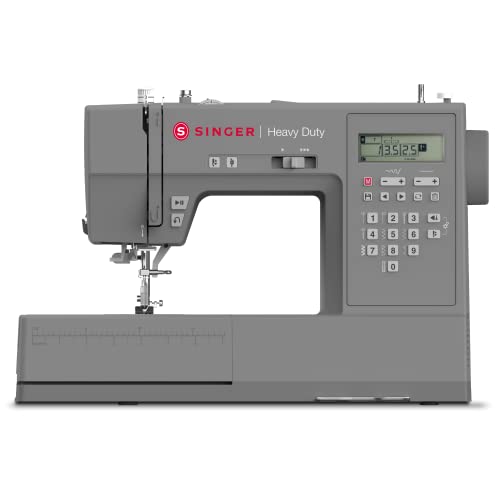
SINGER HD6600 Heavy Duty Computerized Sewing Machine Metal Plastic Intermediate
Product Overview
The HD6600 is part of Singer’s heavy duty line, a group of machines built around a metal internal frame and a stronger motor than a typical entry-level sewing machine. The “computerized” label means stitch patterns and settings are selected electronically, usually with buttons and an LCD screen, instead of by turning physical dials. This gives you a cleaner way to choose a stitch, adjust length and width, and set a one-step buttonhole, while the mechanical core still does the heavy lifting.
In practical terms, this is a machine for building and repairing things rather than for fine decorative work. Heavy duty machines like this are typically designed to sew through several layers of medium-to-heavy fabric, and the listing name signals that intent. If your sewing is mostly garment construction in quilting cottons and jersey, a standard computerized machine will serve you well. If you regularly hit a wall when a seam gets thick, the HD6600’s category is built for exactly that problem.
For a broader sense of how this class of machine fits into a sewing setup, see Heavy Duty vs Computerized Sewing Machine: Which Fits Your Sewing?, which explains the trade-offs between the two design approaches.
Key Features & Specifications
The table below lists only the characteristics that are stated in the product name or that are well established for this model family. Confirm exact figures on the current Amazon listing and in the Singer manual before purchasing, since configurations can vary between packaging versions.
| Feature | What It Means for You |
|---|---|
| Machine type | Computerized, heavy duty |
| Frame | Metal internal construction with plastic exterior |
| Stitch selection | Electronic, button-based selection |
| Buttonhole | Automatic one-step buttonhole |
| Lighting | LED work light |
| Display | LCD screen for stitch and setting information |
| Primary use | Denim, canvas, upholstery-weight fabrics, bags, home dec |
Compared with the more feature-heavy members of the same family, the HD6600 is positioned as the practical, utility-focused option. If you want to see how a higher-spec sibling stacks up, read Singer Heavy Duty 6800c Computerized Sewing Machine: A Practical Guide (2026), and for a full field of options in this category, 6 Best Singer Heavy Duty Computerized Sewing Machines (2026): Our Picks is a useful next step.
Pros & Cons
Pros
- Metal internal frame supports stable stitching through thick, multi-layer seams.
- Computerized controls make stitch and setting changes quicker than a dial-only machine.
- Automatic one-step buttonhole saves time on garments, bags, and home projects.
- LED light and LCD screen make it easier to see the work and confirm settings.
- Suited to denim, canvas, and upholstery-weight fabric that defeats many lightweight machines.
- Straightforward control layout that suits sewists moving up from a basic machine.
Cons
- Plastic exterior means it is less rugged in appearance and handling than an all-metal machine.
- Stitch menu is narrower than premium computerized models, which matters for decorative quilting.
- Owners who need embroidery, a large work area, or extensive lettering will need a different machine.
- Heavy duty machines are typically heavier, so portability is limited.
- Beginners may find the sheer number of settings more involved than a basic mechanical machine.
Performance Analysis
Performance for a machine like this is best judged by three things: how it handles thick fabric, how consistent the stitch is, and how usable the controls are day to day. Based on the design category and the frame construction, the HD6600 is positioned to handle heavy fabrics better than an entry-level lightweight model. A metal internal frame reduces flex during stitching, which helps keep the needle path steady when you push through a hem or a canvas seam.
Owner feedback for heavy duty computerized Singer machines tends to cluster around a few themes. Many owners report that the machine handles denim and canvas hems with less strain than they expected from a computerized model, which is the main reason people choose this class. Others mention that the automatic buttonhole saves real time once they learn the correct fabric and stabilizer setup. Common frustrations include the learning curve for the menu system, the need to re-check tension on very thick layers, and the limits of the stitch selection if you want highly decorative output. These are patterns to weigh, not guarantees for any individual unit.
For a practical starting point on needles and thread when working through thick fabric, the principles in Singer Heavy Duty Sewing Machine Bobbins: 5 Best Picks Compared (2026) are a useful companion, since bobbin choice affects how smoothly a heavy machine runs on dense seams.
Who Should Buy This Product?
This machine is a good match if you sew frequently with denim, canvas, upholstery fabric, or multiple layers of medium-weight material, and you want a computerized interface for convenience. It also suits sewists who make bags, tote straps, outdoor gear, or home décor items that need a reliable buttonhole and a strong, consistent stitch. If you are moving from a basic mechanical machine and want stronger performance without learning a large set of advanced features, the HD6600 is a sensible step up.
You should skip this machine if your main work is free-motion quilting, heavy embroidery, or detailed decorative stitching, since the stitch library is not designed around those tasks. Absolute beginners may also prefer a lighter, simpler machine. For a comparison of beginner-friendly options, see Mechanical or Computerized Sewing Machine for Beginner: 6 Best Picks (2026) before committing.
Buying Guide
Before buying any heavy duty computerized machine, check four things: the fabrics you sew most often, the thickest seam you expect to stitch, the stitch types you actually need, and whether you have room for a machine that is heavier and larger than a standard model. A useful rule is to test your heaviest typical project mentally: if it involves more than four layers of denim or a canvas bag with straps, a heavy duty frame is worth the trade-off.
Consider these checkpoints when comparing models:
- Frame and motor: Metal internal frames and a stronger motor matter most for thick fabric.
- Stitch library: Count the stitches you will use, not the total number on the box.
- Buttonhole type: A one-step buttonhole saves time if you make garments or bags.
- Accessories: Confirm the included presser feet and accessory kit cover your projects.
- Service and support: Check warranty terms and how easily parts and manuals are available.
Well-known alternatives in the same family are worth a direct look. The Singer 6800C is positioned as a higher-feature option with a larger stitch library, LCD screen, lettering, mirror imaging, and a 1-step buttonhole:

SINGER® 6800C Heavy Duty Computerized Sewing Machine with Accessory Kit | 586 stitch applications, LCD screen, lettering font, mirror imaging, LED light, strong motor, metal frame, 1-step buttonhole
The Singer 6700C sits between the two, offering a substantial stitch selection, touch-button selection, a 1-step buttonhole, and an LCD screen, which can suit sewists who want more options than the HD6600 without the full feature set of the 6800C:
SINGER® 6700C Heavy Duty Computerized Machine with Accessory Kit | 411 stitch applications, lettering, touch button stitch selection, 1100 stitches/min,1-step buttonhole, LCD screen, LED light
If your sewing centers on denim and canvas specifically, 6 Best Computerized Heavy Duty Sewing Machines for Denim and Canvas (2026) offers a broader set of comparisons across brands.
FAQ
Is the singer hd6600 heavy duty computerized sewing machine good for beginners?
It can work for beginners who are committed to learning, but it is not the easiest starting point. The computerized menu and the heavy duty frame reward a user who wants to sew thick fabrics. Beginners who mainly make simple garments may find a lighter, simpler machine less intimidating.
Can it sew through denim and canvas?
That is the category it is designed for. The metal internal frame and stronger motor are intended to handle denim, canvas, and similar heavy materials. Use an appropriate needle size and test on scraps first, since needle and thread choice still matter a great deal on thick fabric.
Does it have embroidery capability?
The HD6600 is a sewing machine focused on construction and utility stitching. If embroidery is a priority, look at a dedicated embroidery or combination machine rather than relying on a heavy duty sewing model.
How does it compare to the Singer 6800C?
The 6800C offers a larger stitch selection, lettering, mirror imaging, and an LCD screen, while the HD6600 is positioned as a more straightforward heavy duty option. Choose the HD6600 if you want utility and price-conscious practicality; choose the 6800C if you use a wider range of decorative stitches.
Is it heavy to move around?
Yes, heavy duty machines are generally heavier than lightweight models because of the metal internal frame and motor. If you plan to transport it often, factor that into your decision and check whether a carrying case or sturdy table suits your workspace.
What needles should I use with a heavy duty machine?
Use heavier needles, typically sized for denim, canvas, or leather depending on the fabric, and change them regularly. Dull or undersized needles are a common cause of skipped stitches and thread breakage on thick material.
Should I buy it or wait for a newer model?
If the stitch options and heavy duty construction match your projects, buying a well-established model is often the practical choice. Review current specifications on the listing before purchase, since model details can change over time.
Where can I find the manual and support information?
Check the Singer website and the included printed documentation for manual downloads and warranty details. Keeping the manual handy will help you learn the menu system and maintenance steps.
Final Verdict
The singer hd6600 heavy duty computerized sewing machine is a sensible choice for sewists who work with denim, canvas, bags, and other thick fabrics and want computer-assisted controls with a sturdy, metal-framed construction. It is not the right tool for decorative quilting, embroidery, or sewists who need an extensive stitch library. If your projects fit the heavy duty profile, it is worth a close look, and the alternatives above give you clear next steps if you need more features or a different balance of cost and capability.
View on AmazonAbout Emily Parker
Emily Parker is part of our editorial team and reviews and edits our sewing supplies guides, checking product details against manufacturer specifications and owner feedback.
About the author
Emily Parker writes reviews and buying guides for Sewing Thread Online.